Pune · Maharashtra

Fresh Air Ventilation in Pune

Semi-arid moderate — pleasant winters, hot summers, rising AQI
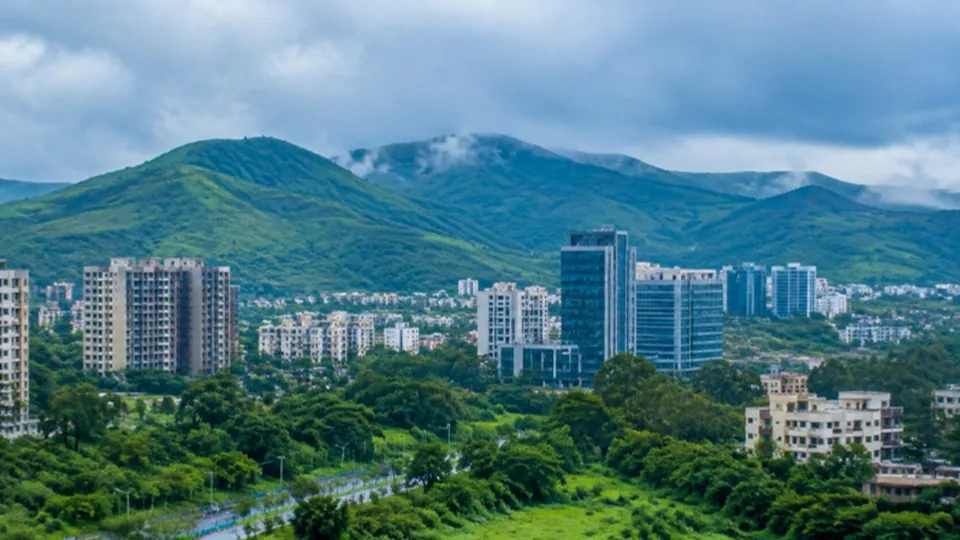
InAir Fresh Air Ventilation in Pune
Summer temp
36–42°C
Humidity
35–70% RH
AQI range
80–150
Filter grade
MERV-13 (HEPA-13 near industrial zones)

What makes ventilation difficult in Pune?

Pune has grown rapidly — construction dust, vehicle emissions, and industrial expansion near Pimpri-Chinchwad have increased AQI. While the climate is relatively mild, summer temperatures reach 42°C and sealed apartments accumulate CO₂ and VOCs rapidly.

Which machine is right for Pune?

Revita ERV + MERV-13

Pune's moderate humidity makes RHP dehumidification unnecessary in most cases. Standard Revita ERV provides 80–90% heat recovery, valuable during peak summer (42°C). MERV-13 handles rising PM2.5 adequately. Upgrade to HEPA-13 for locations near Bhosari, Pimpri-Chinchwad industrial corridors or occupants with respiratory sensitivity.

For Pune we specify Revita ERV as the default, with MERV-13 (HEPA-13 near industrial zones) filtration. Models: Revita INA-MFQR series (residential), Ventura INA-QRXF (commercial). Model-by-model airflow, static pressure and power figures are on the spec sheets.

Typically installed in: Apartments · IT parks · Premium villas · Educational institutions.
Also worth considering: RHP for premium commercial projects or healthcare facilities

How is a system sized here?

Sizing is driven by occupancy, not floor area — CO2 comes from people, so a small crowded flat needs more air than a large empty one. ASHRAE 62.1 sets the airflow per person; that number picks the unit. Pune then adds two local constraints: a summer peak of 36–42°C, which decides how much heat recovery is worth paying for, and humidity of 35–70% RH, which decides whether plain recovery is enough or whether active dehumidification is needed.

Get a free Pune site survey Compare all 15 cities
Pune questions

What do people in Pune ask?

Pune sees an AQI range of roughly 80–150 through the year. Pune has grown rapidly — construction dust, vehicle emissions, and industrial expansion near Pimpri-Chinchwad have increased AQI. While the climate is relatively mild, summer temperatures reach 42°C and sealed apartments accumulate CO₂ and VOCs rapidly. That range is what sets the filter grade: we specify MERV-13 (HEPA-13 near industrial zones) here.
Revita ERV + MERV-13. We recommend the Revita energy recovery ventilator for Pune. Pune's moderate humidity makes RHP dehumidification unnecessary in most cases. Standard Revita ERV provides 80–90% heat recovery, valuable during peak summer (42°C). MERV-13 handles rising PM2.5 adequately. Upgrade to HEPA-13 for locations near Bhosari, Pimpri-Chinchwad industrial corridors or occupants with respiratory sensitivity.
MERV-13 (HEPA-13 near industrial zones). Filter grade follows the local AQI rather than a national default — MERV-13 handles ordinary urban particulate, while HEPA-13 is warranted where AQI regularly passes 200 or where dust and industrial sources are present. In Pune the range is 80–150.
Yes. InAir supplies and installs across India from its Hyderabad base, and Pune in Maharashtra is covered end to end — free site survey, duct design, supply, commissioning with measured airflow readings, and handover. A typical residential installation is commissioned ten to twelve days after order. Send a floor plan to sales@in-air.in and an engineer returns a sized proposal.
Sizing starts from occupancy rather than floor area, because CO₂ is produced by people. ASHRAE 62.1 gives the airflow per person; that figure sets the unit, and the Pune summer peak of 36–42°C plus humidity of 35–70% RH decides whether plain heat recovery is enough or whether active dehumidification is required.