Fresh Air Ventilation by City — 15 Indian Cities
Right machine. Right city. Right result.
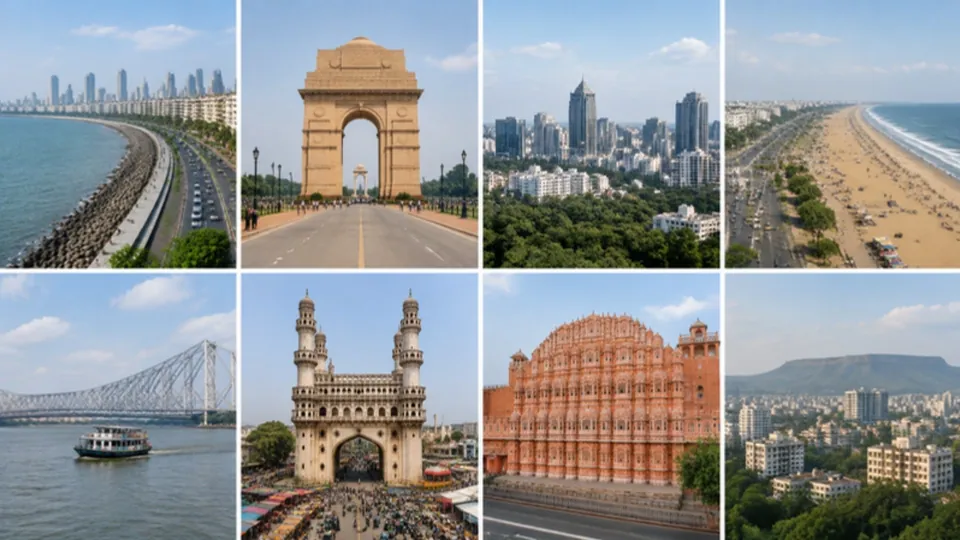
India's climate varies dramatically — from 90% humidity in Mumbai to 20% in Ahmedabad, from AQI 500 in Delhi to AQI 50 in Kochi. A single machine cannot be right for every city. Here is the InAir engineering team's city-by-city machine selection guide for 15 major Indian cities.
Mumbai's monsoon brings outdoor humidity above 90% RH for 4+ continuous months. A standard ERV transfers this moisture indoors — without active dehumidification, indoor humidity stays high despite ventilation. Salt-laden coastal air adds to the filtration challenge.
The RHP's R410A cooling coil actively strips moisture from every cubic metre of incoming outdoor air — delivering dry, conditioned fresh air at 22–28°C regardless of outdoor humidity. This eliminates the condensation and mould risk that affects Mumbai homes during monsoon. HEPA-13 captures coastal particulates and construction dust.
Delhi presents India's most demanding IAQ challenge: AQI regularly crosses 400 in October–February, summer temperatures touch 46°C, and winter nights drop to 2–5°C. Standard MERV-13 filtration is completely inadequate — HEPA-13 is the minimum viable filter grade.
HEPA-13 captures 99.97% of PM2.5 — non-negotiable for Delhi. Premium: RHP provides active cooling (46°C summers) and heat recovery (2°C winters) with year-round HEPA-13 filtration. Standard: Revita ERV + HEPA-13 filter box delivers clean air at lower cost. Both options are infinitely better than no ventilation.
Bangalore's rapid growth has worsened AQI. Despite a mild climate, sealed modern apartments trap VOCs, CO₂ from occupants, and construction PM2.5. Mild temperatures make this one of India's most ERV-friendly cities.
Bangalore's mild temperatures (rarely above 36°C) mean standard ERV handles heat recovery efficiently without needing active cooling. The Revita's 80–90% heat recovery slightly pre-conditions incoming air. MERV-13 captures construction PM2.5 — upgrade to HEPA-13 near active construction sites or for medical-grade environments.
Hyderabad summers peak at 44°C — among India's hottest. Homes seal windows completely in April–June. ERV heat recovery is critical here: without it, fresh air intake at 44°C dramatically increases AC load. Humidity is moderate, making standard ERV the right choice.
80–90% heat recovery means incoming 44°C outdoor air is pre-cooled to ~26–28°C before reaching the AC — dramatically reducing cooling load. Humidity is manageable without active dehumidification. MERV-13 handles road dust and urban PM2.5 adequately. The Revita INA-MFQR-350 is our most popular model for Hyderabad 3 BHK apartments.
Chennai is unique: high humidity is year-round, not just monsoon. The northeast monsoon (October–December) brings sustained humidity above 90% RH combined with 40°C temperatures. One of India's most demanding latent-load environments.
RHP's active dehumidification is essential in Chennai — year-round humidity means you cannot rely on passive heat exchange alone. The R410A cooling coil removes moisture continuously, preventing condensation inside ducts and walls. Marine aerosols from the Bay of Bengal make HEPA-13 the recommended filter grade.
Kolkata combines extreme pre-monsoon heat (42°C in April–May) with sustained monsoon humidity AND one of India's more polluted AQI profiles. Dual challenge: latent load from humidity and particulate from industrial and biomass sources.
Kolkata's consistently high AQI (150–250) combined with monsoon humidity (80–95% RH) demands dual action: RHP's active dehumidification removes moisture from every cubic metre of incoming air, while HEPA-13 captures PM2.5 from industrial and biomass sources. Standard ERV would transfer outdoor humidity indoors and lack the filtration grade this city requires.
Pune has grown rapidly — construction dust, vehicle emissions, and industrial expansion near Pimpri-Chinchwad have increased AQI. While the climate is relatively mild, summer temperatures reach 42°C and sealed apartments accumulate CO₂ and VOCs rapidly.
Pune's moderate humidity makes RHP dehumidification unnecessary in most cases. Standard Revita ERV provides 80–90% heat recovery, valuable during peak summer (42°C). MERV-13 handles rising PM2.5 adequately. Upgrade to HEPA-13 for locations near Bhosari, Pimpri-Chinchwad industrial corridors or occupants with respiratory sensitivity.
Ahmedabad regularly records India's highest summer temperatures (46–48°C). However, it is also one of India's driest — humidity drops below 20% RH in peak summer. Extreme heat with very low humidity is a unique ventilation profile.
Ahmedabad's dry climate means ERV moisture transfer is actually beneficial (prevents air from being too dry). Heat recovery at 46°C outdoor temperature is critical. For premium: RHP provides active cooling making fresh air comfortable at peak temperatures. HEPA-13 essential for homes near GIDC Naroda, Vatva, or Odhav industrial estates.
Kochi faces perpetually high humidity — often 90%+ even outside monsoon season. Temperatures are moderate but the year-round latent load is extreme. Without active dehumidification, fresh air ventilation actively increases indoor humidity.
Kochi's year-round 85–95% RH makes RHP essential. The active refrigerant circuit removes moisture from every cubic metre of incoming air before it enters your home. A standard ERV in Kochi would transfer outdoor humidity indoors, defeating the purpose of ventilation. RHP delivers dry, comfortable fresh air at 22–28°C throughout the year. AQI is relatively clean, so MERV-13 is adequate.
Chandigarh spans an extreme temperature range — India's best-planned city but with highly variable climate. Winter AQI spikes as cold air traps pollutants. Summers are North India's hottest. A system must handle both extremes effectively.
The 45°C summer benefits from RHP active cooling; 2°C winters benefit from heat recovery that prevents cold air from reducing indoor temperatures. HEPA-13 is essential for winter months when Punjab/Haryana AQI deteriorates significantly. RHP's full-range performance (cooling + heating + dehumidification + filtration) makes it the preferred single system for Chandigarh's extreme climate span.
Jaipur is one of India's dustiest cities — Rajasthan dust storms dramatically spike PM2.5 seasonally. Extreme summer heat (46°C+) with very low humidity: dehumidification is not needed, but HEPA-13 dust storm protection is critical.
Jaipur's dry climate means ERV moisture transfer is actually beneficial (prevents air from being uncomfortably dry). Heat recovery is highly effective at 46°C. However, HEPA-13 is essential — Rajasthan dust storms carry PM2.5 from fine sand particles at concentrations that quickly overwhelm MERV-13 filters. The Revita with HEPA-13 upgrade is the optimal solution.
Surat is India's diamond and textile hub. Industrial emissions from textile dyeing, chemical processing, and diamond polishing create complex pollution with both PM2.5 and VOC contamination. Coastal humidity compounds the latent load challenge.
Surat's combination of coastal humidity and industrial VOC requires dual action: RHP for active dehumidification of humid coastal air, HEPA-13 for PM2.5 from industrial and textile sources, and activated carbon for VOC from dyeing and chemical processing. Homes near Sachin GIDC, Pandesara, or Palsana industrial areas should specify activated carbon alongside HEPA-13.
Nagpur regularly records India's highest temperatures (46–48°C) with no moderating sea breeze. Its central geographic location experiences maximum solar radiation. Extreme summer heat places maximum stress on any ventilation system.
At 48°C outdoor temperature, every degree of ERV heat recovery translates to meaningful AC savings. RHP's active cooling compounds this — delivering 22–28°C fresh air regardless of outdoor temperature. Humidity is moderate, so Revita ERV is viable for cost-conscious residential. RHP strongly recommended for commercial and institutional use where fresh air conditioning quality matters most.
Vizag is a major port city with steel and pharmaceutical industries. Coastal humidity is high year-round, cyclone season (October–December) brings extreme weather, and industrial sources from Vizag Steel and the port contribute to AQI.
Vizag's combination of coastal humidity (70–90% RH) and industrial PM2.5 from port and steel operations requires RHP treatment: active dehumidification removes coastal moisture from incoming air, while HEPA-13 captures both fine industrial particulates and sea salt aerosols. The system performs reliably through cyclone season and post-storm recovery phases.
Lucknow shares Delhi's winter pollution crisis (AQI 300–400) but also has humid summers unlike Delhi. Winter fog traps pollutants for weeks. Wide temperature range from 45°C summer to 5°C winter demands a versatile system.
HEPA-13 is mandatory for Lucknow — not optional. AQI regularly reaches 300–400 in winter. Premium: RHP handles the full range (45°C summer active cooling, 5°C winter heat recovery, monsoon dehumidification) with year-round HEPA-13 filtration. Standard: Revita ERV + HEPA-13 filter box is the cost-effective minimum viable solution. Both are essential — unfiltered fresh air in Lucknow winter is dangerous.
At-a-glance: 15 cities, right machine
| City | Climate | Recommended Solution | Filter Grade |
|---|---|---|---|
| Mumbai | 35–38°C · 85–95% RH (monsoon) | RHP Series + HEPA-13 | HEPA-13 |
| Delhi NCR | 42–46°C · 30–40% RH summer / 60–80% monsoon | RHP + HEPA-13 (Premium) · Revita ERV + HEPA-13 (Standard) | HEPA-13 (mandatory) |
| Bangalore | 28–36°C · 50–70% RH | Revita ERV + MERV-13 | MERV-13 (HEPA-13 near construction) |
| Hyderabad | 40–44°C · 40–65% RH | Revita ERV + MERV-13 | MERV-13 standard |
| Chennai | 38–42°C · 70–95% RH (year-round) | RHP Series + HEPA-13 | HEPA-13 recommended |
| Kolkata | 38–42°C · 80–95% RH (May–October) | RHP Series + HEPA-13 | HEPA-13 (mandatory given AQI) |
| Pune | 36–42°C · 35–70% RH | Revita ERV + MERV-13 | MERV-13 (HEPA-13 near industrial zones) |
| Ahmedabad | 44–48°C · 15–30% RH (summer) | Revita ERV + MERV-13 (Standard) · RHP (Premium for extreme summer) | MERV-13 (HEPA-13 near GIDC industrial zones) |
| Kochi | 28–35°C · 80–95% RH (year-round, often 90%+) | RHP Series + MERV-13 | MERV-13 (AQI is relatively clean) |
| Chandigarh | 42–46°C · 30–70% RH | RHP + HEPA-13 (Preferred) · Revita ERV + HEPA-13 (Standard) | HEPA-13 (winter AQI spikes require it) |
| Jaipur | 44–48°C · 15–30% RH (summer) | Revita ERV + HEPA-13 | HEPA-13 (dust storm protection essential) |
| Surat | 38–42°C · 60–85% RH | RHP Series + HEPA-13 + Activated Carbon | HEPA-13 + activated carbon |
| Nagpur | 44–48°C · 20–60% RH | RHP Series (Premium) · Revita ERV + MERV-13 (Standard) | MERV-13 (HEPA-13 for sensitive occupants) |
| Visakhapatnam | 35–42°C · 70–90% RH | RHP Series + HEPA-13 | HEPA-13 (industrial port city) |
| Lucknow | 40–45°C · 50–85% RH (monsoon) | RHP + HEPA-13 (Premium) · Revita ERV + HEPA-13 (Standard) | HEPA-13 (mandatory — AQI profile similar to Delhi) |
Not sure which machine is right for your city?
Our engineers assess your specific building, location within your city, floor height, occupancy, and AQI exposure — then recommend the exact model, filter grade, and airflow for your project.
5,000+ installations across India · Free site survey · 10–12 day typical installation