Case Study 06 · High-AQI Cities
Delhi Winter — Fresh Air During AQI Spike Seasons
The most common objection in high-AQI cities: "we can’t bring in outdoor air in winter." This analysis addresses how InAir’s MERV-13 / HEPA-13 filtration + ERV heat recovery performs during Delhi’s worst air quality months — and why indoor air without InAir is often worse than outdoor air with it.
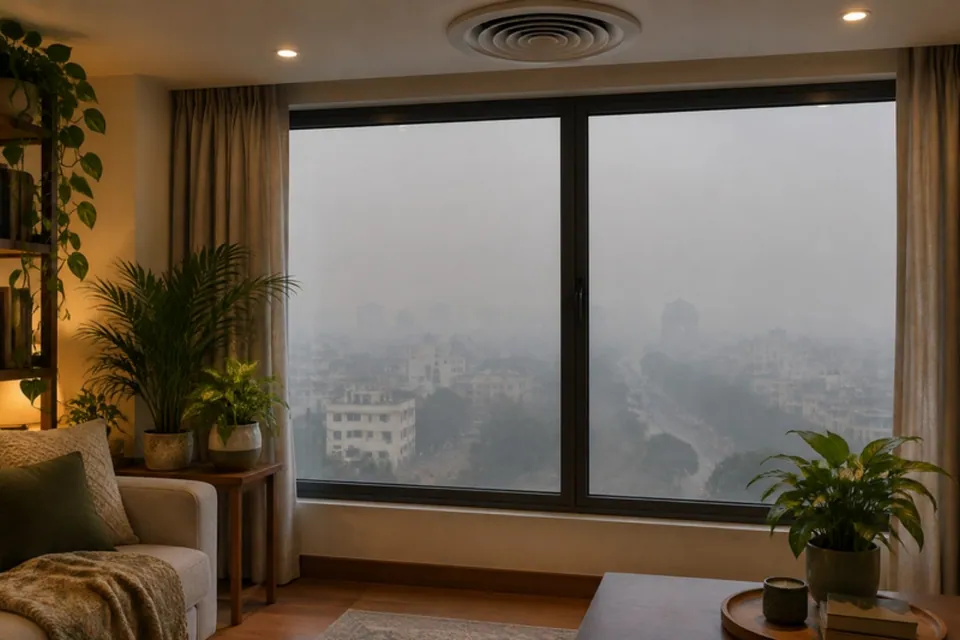
AQI 300
Delhi winter typical peak — PM2.5 220μg/m³
95%
PM2.5 reduction via MERV-13 / HEPA-13 filtration
11μg/m³
Post-filter PM2.5 — below WHO guideline
Delhi Winter Performance
Outdoor AQIAQI 300 (PM2.5: 220μg/m³)
After MERV-13 / HEPA-13 filterPM2.5: ~11μg/m³ (95%+ removal)
Indoor without InAirSealed room: CO₂ 1500–2500ppm + indoor PM2.5 accumulates
Indoor with InAirCO₂ <800ppm + PM2.5 <12μg/m³
Heat recovery80–90% — fresh air arrives at near indoor temperature
VerdictIndoor air with InAir is significantly better than sealed indoor air without it
The Counter-Intuitive Truth
| Scenario | PM2.5 Level | CO₂ Level | Assessment |
|---|---|---|---|
| Sealed AC room (no ventilation) | Accumulates over hours | 1500–2500ppm | Worst option |
| Open windows (AQI 300) | 220μg/m³ directly | <600ppm | High particulate risk |
| Air purifier only (sealed room) | Reduced particulates | CO₂ still builds | Partial solution |
| InAir ERV (MERV-13 / HEPA-13) | ~11μg/m³ (| <800ppm | Best outcome | |
A sealed room without ventilation doesn’t protect you from outdoor PM2.5 — indoor sources (cooking, cleaning products, furniture off-gassing, occupant metabolism) add their own PM2.5 load over time. You need both filtration and air exchange.
Want a custom analysis for your space? We'll model your space
We'll model your space
before we sell you anything.
Get a free site survey and receive a detailed analysis — airflow, energy savings, payback period — for your specific home or building.