Case Study 01 · Mumbai
1000 CMH DX Smart Ventilation — AC Downsizing Analysis
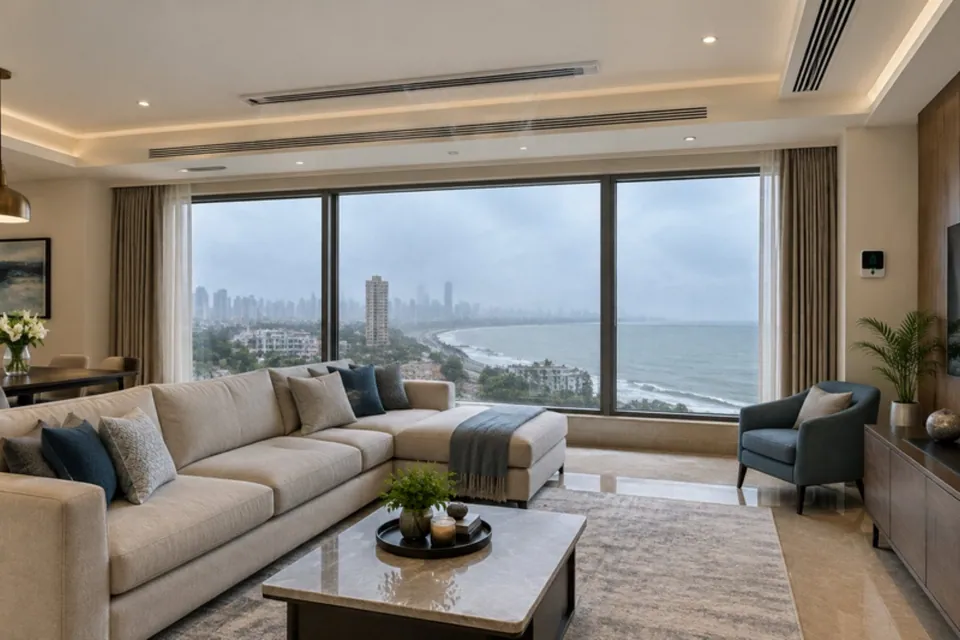
A 4,000 sq ft premium apartment in Mumbai with smart occupancy-based ventilation logic. The analysis integrates InAir's DX ventilation performance with CO₂ + RH-based fan modulation and documents annual energy, AC downsizing benefits, and payback period.
1.2
Yrs — best-case payback
40%
Fan energy saved smart vs constant
20%
Max AC tonnage reduction
Design Conditions
LocationMumbai (Hot & Humid – High Latent Load)
Space4,000 sq ft premium apartment
System1,000 CMH DX ventilation unit
DX Input3.0 kW fixed (compressor ON)
Fan Power0.25 kW EC motor (occupancy modulated)
Control LogicCO₂ + RH-based fan modulation
Tariff₹10 / kWh
Smart Ventilation Logic
| Condition | Fan Operation | DX Logic |
|---|---|---|
| Vacant (>40% rooms empty) | Fan @ 50% speed | DX OFF or RH >70% only |
| Partially Occupied (60–90%) | Fan @ 75% speed | DX auto — RH >65% |
| Fully Occupied (90–100%) | Fan @ 100% speed | DX active per humidity |
Annual Energy & Cost Summary
| Component | Annual Energy | Annual Cost |
|---|---|---|
| DX Compressor | 6,132 kWh | ₹61,320 |
| Smart Fan (occupancy controlled) | 1,314 kWh | ₹13,140 |
| Total System | 7,446 kWh | ₹74,460 |
Consolidated Payback Analysis
| Scenario | Conservative | Optimized | Best Case |
|---|---|---|---|
| AC Energy Saving / yr | ₹1,00,000 | ₹1,25,000 | ₹1,37,500 |
| InAir OPEX / yr | ₹74,460 | ₹74,460 | ₹74,460 |
| Net Annual Benefit | ₹25,540 | ₹50,540 | ₹63,040 |
| System Cost (indicative) | ₹3,50,000 | ₹3,50,000 | ₹3,50,000 |
| Payback Period | ≈1.9 years | ≈1.4 years | ≈1.2 years |
Key takeaway: Occupancy-based ventilation and humidity-driven DX modulation reduce fan runtime from 8,760h to 5,256h — saving ~40% fan energy. Latent load reduction enables 10–20% AC tonnage downsizing, giving 1.2–1.9 year combined payback.
Want a custom analysis for your space? We'll model your space
We'll model your space
before we sell you anything.
Get a free site survey and receive a detailed analysis — airflow, energy savings, payback period — for your specific home or building.