Exhaust fan vs fresh air system: which does your home need?
An exhaust fan removes air from one room. A fresh air system brings filtered outdoor air in, takes stale air out and recovers the cooling energy. Here is where each belongs.
Last updated:
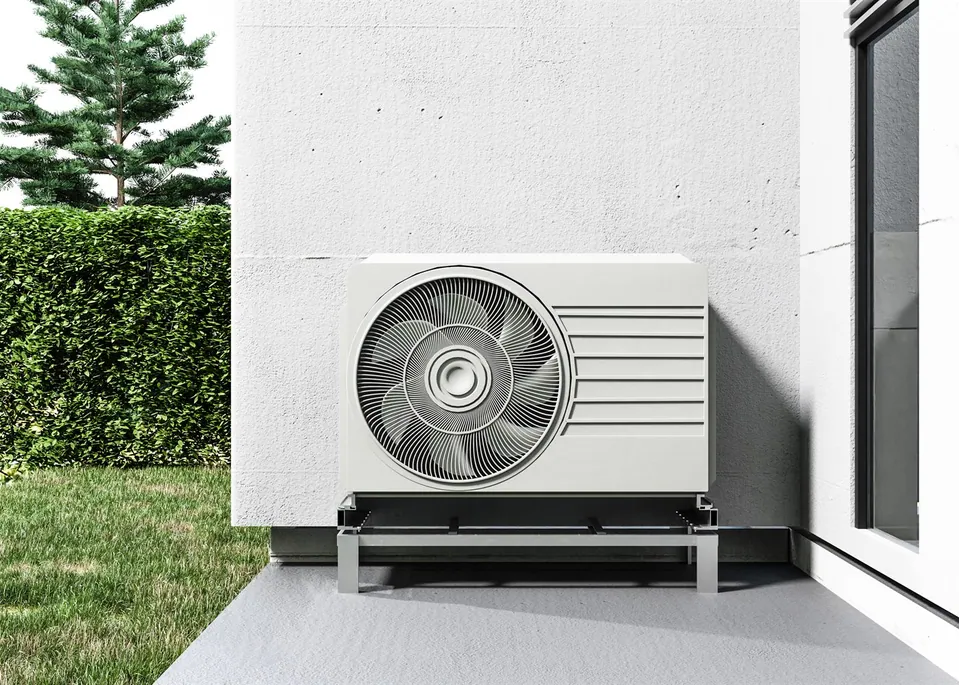
An exhaust fan and a fresh air system both move air, but they do different jobs. An exhaust fan pulls air out of one room. A fresh air system, or energy recovery ventilator (ERV), brings filtered outdoor air in and takes stale air out in balance, recovering most of the cooling energy on the way. Most homes need both: exhaust fans in the toilets and kitchen, and a fresh air system for the bedrooms and living areas.
The short answer
| Exhaust fan | InAir fresh air system (ERV) | |
|---|---|---|
| What it does | Extracts air from one room | Supplies filtered outdoor air and extracts stale air, in balance |
| Where the replacement air comes from | Leaks in through gaps, door undercuts, windows and shafts | Ducted or wall intake, through filters |
| Filtration of incoming air | None | Pre-filter and MERV-13; HEPA-13 optional |
| Energy recovery | None | 89–90% heat recovery (Revita and Ventura, tested) |
| Effect on the AC | Pulls hot, humid outdoor air into cooled rooms | Pre-cools incoming air with the outgoing air |
| Lowers bedroom CO₂ with doors and windows shut | Only weakly, and only in the room it serves | Yes, with fresh air ducted to each bedroom |
| Best place | Toilets, kitchens, utility rooms: removing smells and moisture at source | Bedrooms, living rooms, home offices |
| Rough budget | Low: a single fan per toilet or kitchen | Higher: a system for the home; InAir confirms the exact figure after a free site survey |
Why an exhaust fan cannot ventilate a bedroom
Air cannot leave a room unless the same amount comes back in. When an exhaust fan runs, it lowers the pressure in the room slightly, and replacement air is drawn in wherever it can find a path: under the door from the corridor, through window frames, through plumbing and electrical shafts. That air is unfiltered, so on a bad AQI day it brings outdoor dust straight in. In summer and monsoon it is also hot and humid, so the AC has to work harder to cool and dry it.
In a sealed, air-conditioned bedroom the paths are small, so a fan moves less air than its rating and the room may still feel stuffy. Opening a window to help the fan simply lets in more unfiltered air.
What a fresh air system does differently
A fresh air system controls both sides of the exchange. Outdoor air is drawn in through one intake, filtered, and supplied to the rooms that need it. An equal amount of stale air is extracted and sent outside. In an ERV the two streams pass each other inside a core, so the cool, dry air leaving the home pre-cools and dries the warm air coming in. InAir's Revita and Ventura ERVs recover 89–90% of that heat in testing.
Because the flow is balanced and ducted, each bedroom gets a known quantity of fresh air, which is what keeps CO₂ down overnight. See bedroom CO₂ levels and sleep for why that matters.
How much energy an exhaust fan wastes in summer
Take a fan moving 100 m³/h (about 59 cfm) on a 38 °C afternoon, with the room held at 24 °C. Using the standard sensible-heat formula (1.08 × cfm × temperature difference in °F), the hot air it pulls in adds about 1,602 BTU/h, or roughly 0.47 kW, of cooling load to the AC, before counting the moisture it brings in during the monsoon. An ERV moving the same 100 m³/h recovers 89–90% of that heat, so the added load falls to around 0.05 kW.
This is a simple illustration, not a site calculation; the real figure depends on the city, the season and how the AC is run.
Where exhaust fans are the right answer
Exhaust fans are the right tool for removing smells, steam and moisture at their source. ASHRAE 62.2 sets local exhaust for homes at 50 cfm intermittent or 20 cfm continuous for a bathroom, and 100 cfm intermittent for a kitchen range hood. InAir supplies toilet exhaust fans, inline duct fans and kitchen exhaust for exactly this.
What exhaust fans should not be asked to do is ventilate the rest of the home. That is the fresh air system's job.
The right setup for an Indian home
- Toilets and kitchen: an exhaust fan or hood in each, run when the room is in use.
- Bedrooms and living room, home under construction or renovation: a ducted Revita ERV with flat ducts above the false ceiling.
- Bedrooms in a finished flat: a wall-mounted ERV in each room, needing one wall core-cut and a power point.
- High-AQI cities: add a HEPA-13 stage on the fresh air supply.
Sizing for 2BHK flats to villas is on the fresh air ventilation system for home page, and the ERV sizing calculator gives a first estimate for your own home.
Sources
- ANSI/ASHRAE Standard 62.2, Ventilation and Acceptable Indoor Air Quality in Residential Buildings (whole-house and local exhaust rates). ashrae.org
- ASHRAE Handbook, Fundamentals: sensible heat of air, q = 1.08 × cfm × ΔT (°F).
- InAir test data: Revita and Ventura ERVs, 89–90% heat recovery.
Can an exhaust fan bring fresh air into a room?
Do I still need bathroom exhaust fans if I install an ERV?
Is a fresh air fan the same as an ERV?
Which is better for an AC bedroom: an exhaust fan or a fresh air system?
What does a home fresh air system cost?
Our engineers assess your home or building, recommend the right system and the right filter grade for your city, and give you a clear cost estimate. No obligation.